

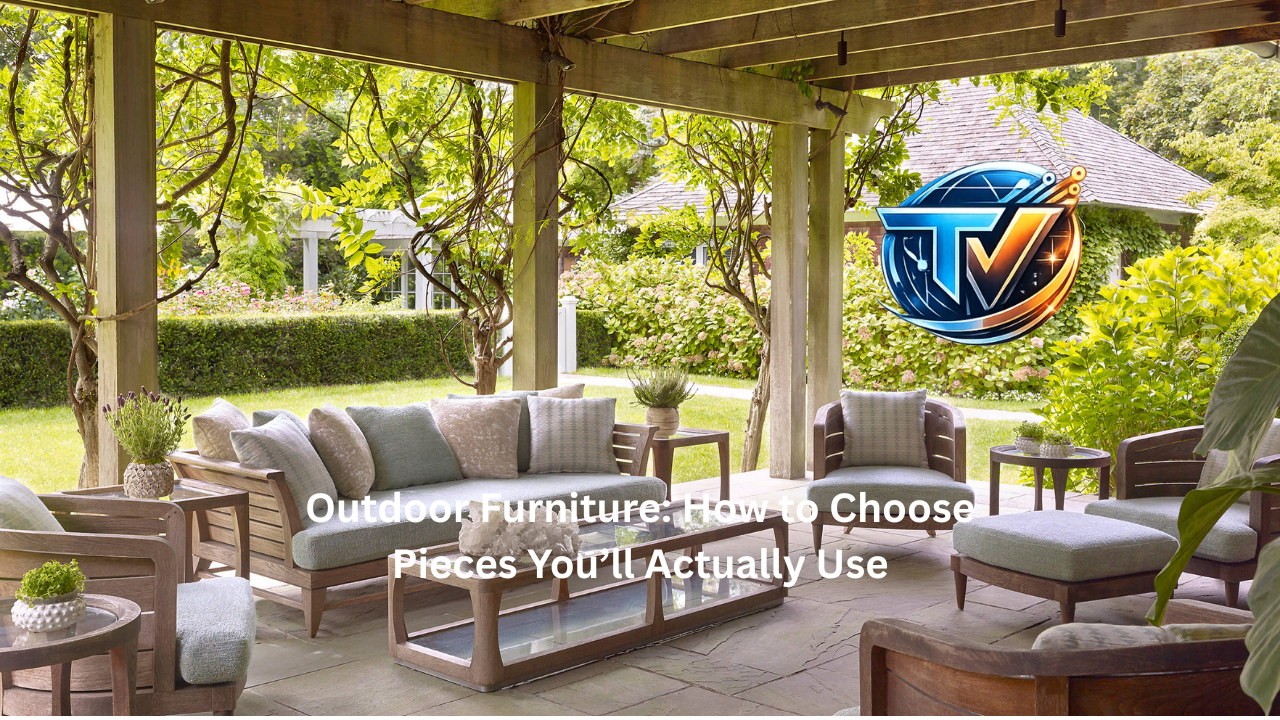
Outdoor space sounds simple.
A few chairs, maybe a table, done.
But anyone who’s tried to set up a balcony, patio, or backyard knows it’s rarely that straightforward. You either end up with furniture that looks great but feels uncomfortable, or pieces that are practical but somehow kill the vibe.
Getting it right takes a bit more thought than people expect.
And honestly, it’s worth it. Because when outdoor furniture works, you use your space more. A lot more.
Why Outdoor Furniture Matters More Than You Think
Let’s be honest.
Most people don’t fully use their outdoor space.
They step outside occasionally, maybe sit for five minutes, then go back in. Not because they don’t like it—but because it doesn’t feel inviting.
That usually comes down to furniture.
Picture this. You walk outside early morning with a cup of tea. There’s a comfortable chair waiting, maybe a small table, a bit of shade. You sit. You stay longer than planned.
Now imagine the opposite. A stiff chair, no place to put your cup, sun hitting your face directly. You’re back inside in two minutes.
That’s the difference good outdoor furniture makes.
Start With How You Actually Live
Here’s the thing people skip.
They buy furniture based on how they wish they lived, not how they actually do.
Someone buys a six-seat dining set… but they live alone and mostly scroll on their phone outside.
Another person gets a lounge chair thinking they’ll relax, but they end up working on a laptop instead.
So before anything else, pause and think.
Do you eat outside often?
Do you sit alone or with others?
Do you want to lie down, or stay upright?
Answer those honestly, and your choices get much clearer.
Comfort Isn’t Optional
Outdoor furniture sometimes looks like it was designed to be admired, not used.
Thin cushions. Hard edges. Awkward angles.
Looks good in photos. Not so great after ten minutes.
Now, comfort doesn’t mean bulky or unattractive. It just means practical.
Try this mental check.
Would you sit in that chair for an hour without adjusting constantly?
If the answer is no, skip it.
Because if you don’t enjoy sitting there, you simply won’t.
Materials Make a Bigger Difference Than Style
Style catches your eye first. Materials decide how long things last.
And outdoor conditions are not gentle.
Sun fades. Rain damages. Dust settles everywhere.
That’s why choosing the right material matters more than the design in the long run.
Wood feels warm and natural, but it needs care.
Metal is strong, but can heat up quickly under direct sun.
Plastic or resin options are low maintenance, though sometimes less premium in feel.
Then there’s rattan-style furniture, which hits a nice balance—lightweight, weather-resistant, and comfortable with cushions.
The best choice depends on your climate and how much maintenance you’re willing to handle.
Small Spaces Need Smarter Choices
Not everyone has a big garden.
Most people are working with balconies or compact patios.
And that’s where smart furniture really shines.
Instead of squeezing in multiple pieces, go for items that do more than one job.
A bench with storage. A foldable table. Stackable chairs.
I’ve seen tiny balconies transformed just by swapping bulky chairs for a slim bench and adding a small side table.
Suddenly, there’s space to move. It feels intentional instead of crowded.
Shade Changes Everything
You can have the best furniture in the world, but if the sun is harsh, you won’t use it.
Shade matters more than people think.
Even a simple umbrella can change the experience completely.
It turns a space from “too hot to sit” into somewhere you actually want to be.
If your outdoor area gets strong sunlight, plan for shade early.
Don’t treat it as an afterthought.
The Role of Layout
Furniture placement often gets ignored.
People just put things where they fit, not where they work best.
But layout changes how a space feels.
Try creating a small “zone.”
A chair angled slightly toward a table feels more natural than everything lined up stiffly.
If you have more space, group seating together instead of spreading it out.
It creates a sense of connection, even if you’re sitting alone.
Don’t Overbuy
This happens all the time.
You see a full set and think, “I’ll just get everything.”
Then half of it goes unused.
Outdoor spaces don’t need to be filled. They need to be functional.
Start with the basics.
One good chair. One table.
Use them for a while.
Then decide what’s missing.
Adding slowly almost always leads to a better result than buying everything at once.
Weather Will Test Your Choices
Here’s something you learn quickly.
Outdoor furniture faces constant wear.
Rain, dust, heat, even birds.
So it helps to think ahead.
Can you easily clean it?
Will cushions need to be stored?
Does it handle water, or does it need covering?
If maintaining it feels like a chore, you’ll avoid using it.
That defeats the whole purpose.
A Quick Real-Life Scenario
A friend of mine set up a small outdoor corner.
Nothing fancy. Just a sturdy chair, a side table, and a simple shade.
At first, it was just for occasional use.
But over time, it became his default spot.
Morning coffee. Evening calls. Even some work sessions.
The setup didn’t change much.
What changed was how often he used it.
That’s what good outdoor furniture does.
It quietly becomes part of your routine.
Style Still Matters—Just Not First
Once comfort and function are sorted, then you can think about style.
Colors, textures, small details.
Maybe you prefer a clean, modern look. Or something more relaxed and natural.
Add a cushion. A small rug. A plant nearby.
Those touches make the space feel complete.
But they only work if the base furniture already does its job.
Lighting Makes It Usable at Night
Outdoor furniture isn’t just for daytime.
A bit of lighting can extend its use.
Soft lights. Nothing harsh.
Even a simple string light or a small lamp can change the mood completely.
Suddenly, the space feels calm instead of dark and forgotten.
Keep It Easy to Maintain
Here’s the thing.
The easier it is to maintain, the more you’ll use it.
If you have to clean everything every time before sitting, it becomes a barrier.
Choose materials and setups that don’t demand constant effort.
Wipe, sit, relax.
That’s the goal.
Final Thoughts
Outdoor furniture isn’t about filling space.
It’s about creating a place you actually want to spend time in.
That might be a full setup for gatherings, or just one comfortable chair for quiet moments.
Both are valid.
The key is to match your furniture to your real habits, not ideal ones.
Start simple. Focus on comfort. Think about how you’ll use it day to day.
Because when it’s done right, your outdoor space stops being “extra.”
It becomes part of your everyday life.
And that’s when it really starts to matter.
