

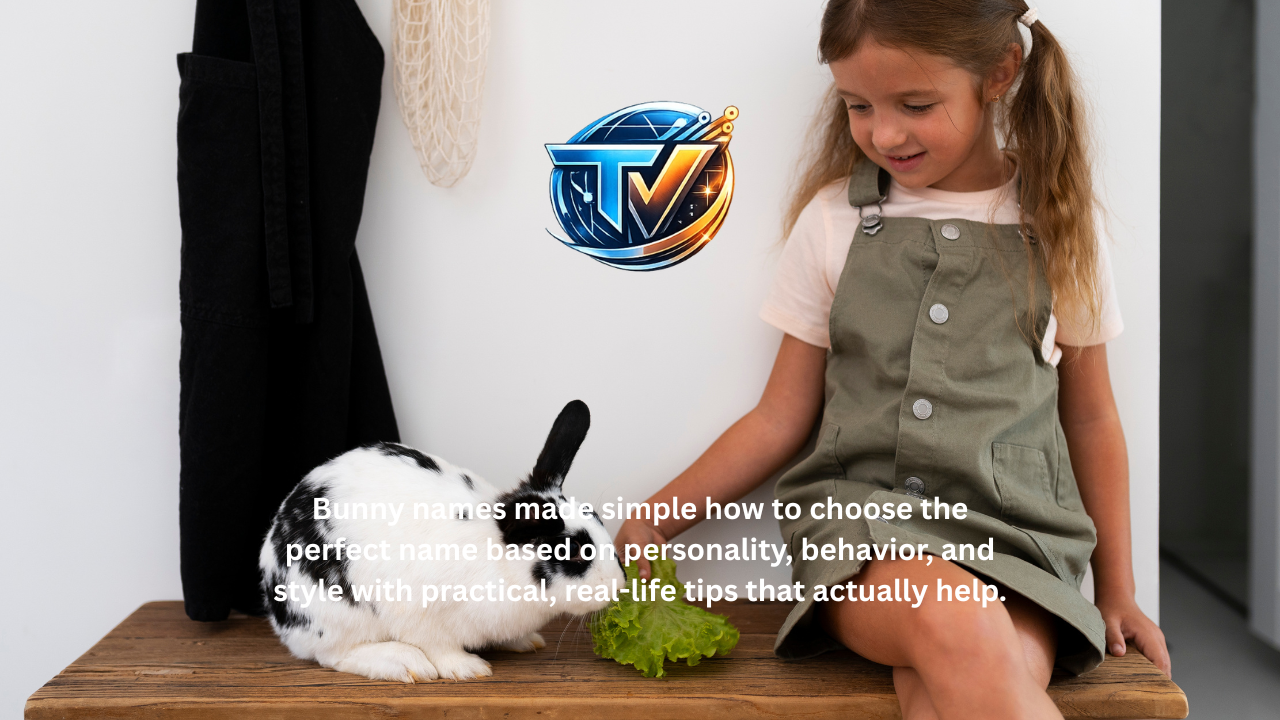
Naming a bunny sounds easy—until you actually try.
You bring your rabbit home, set up the space, maybe watch it hop around for a bit. It pauses. Looks at you. Twitches its nose like it’s judging your life choices.
And suddenly, “just pick a cute name” doesn’t feel so simple anymore.
Because here’s the thing—bunny names stick. You’ll say them every day. Quietly, loudly, sometimes in a slightly embarrassing baby voice when no one’s around.
So yeah, it matters more than people admit.
Why Bunny Names Feel So Personal
A rabbit isn’t like naming a phone or even a car.
There’s personality involved.
Some bunnies are calm. They sit in a corner, quietly observing everything like a tiny philosopher. Others? Absolute chaos. Running, jumping, chewing things they definitely shouldn’t.
And that personality shapes the name.
You might think you’ll go with something classic like “Snowball.” Then your rabbit starts acting like it owns the house—and suddenly “Boss” feels more accurate.
Names evolve from behavior. Not just appearance.
The First Mistake Most People Make
Let’s be honest—most people name their bunny too quickly.
Day one, they decide. No observation. No patience.
And then a week later, it doesn’t feel right anymore.
It’s like naming someone before you’ve even had a conversation with them.
A better approach? Wait a little.
Watch how your bunny moves. What it reacts to. Whether it’s shy, curious, stubborn, or weirdly obsessed with one corner of the room.
Those small details make the name feel earned.
When Looks Inspire the Name
Now, looks do play a role. You can’t ignore that.
A fluffy white rabbit might naturally lean toward soft, gentle names. Something light, maybe playful.
A darker-colored bunny might feel like it needs something stronger. A bit more grounded.
But here’s where it gets interesting.
Sometimes going against the obvious choice works better.
Imagine a tiny, soft bunny named “Thunder.” It sounds ridiculous—and somehow perfect.
That contrast can make the name more memorable.
A Quick Real-Life Scenario
Picture this.
You’re sitting on the floor, watching your bunny explore. It hops forward, pauses, then suddenly sprints across the room like it remembered something urgent.
Then it stops again. Completely still.
You laugh.
That mix of calm and chaos? That’s where names like “Zoom,” “Dash,” or even something ironic like “Slowpoke” start to make sense.
Names don’t come from thinking too hard. They come from moments like that.
The Influence of Pop Culture
Let’s not pretend pop culture doesn’t sneak in.
People love referencing familiar characters when naming pets. And rabbits are no exception.
You’ve got iconic names like Bugs Bunny or softer, more classic choices like Thumper.
These names carry a certain feeling with them.
Playful. Nostalgic. Instantly recognizable.
But there’s a small catch.
If everyone uses the same references, names start to feel less unique.
That doesn’t mean you shouldn’t use them. Just know you’re stepping into familiar territory.
Short Names Work Better Than You Think
Here’s a practical tip that actually matters.
Short names are easier.
One or two syllables. Clear sound. Easy to repeat.
Because you will repeat it—a lot.
Calling your bunny across the room, talking to it while feeding, casually saying its name without even thinking.
Long names sound fun at first, but they tend to get shortened anyway.
So you might as well start simple.
The Sound of the Name Matters
This part is often overlooked.
The way a name sounds makes a difference.
Soft sounds—like “Milo,” “Luna,” or “Coco”—feel gentle and calm.
Sharper sounds—like “Ziggy,” “Rocky,” or “Max”—feel more energetic.
Your bunny won’t understand language the way humans do, but it will respond to tone and repetition.
So pick something that feels natural to say.
If it feels awkward, you’ll notice quickly.
Matching the Name to Personality
Let’s circle back to personality, because this is where things really click.
A shy bunny might suit a quiet name. Something subtle.
A bold, curious bunny? That’s where you can go bigger. Fun, quirky, maybe even a little dramatic.
And sometimes, the best names come from inside jokes.
Something only you understand.
Those names feel more personal than anything you’d find on a list.
When Two Names Make Sense
Some people end up using two names without even planning it.
A “real” name and a nickname.
It happens naturally.
You start with something simple, then over time, it evolves. Maybe you add a twist, shorten it, or turn it into something completely different.
And your bunny responds to both.
That flexibility is part of the fun.
The Emotional Side of Naming
This might sound a bit deeper than expected—but naming a pet creates a connection.
It turns an animal into your animal.
Before the name, it’s just a bunny. After the name, it’s part of your life in a more personal way.
You call it. You talk to it. You build a routine around it.
And the name becomes part of that bond.
That’s why it feels important.
Avoiding Names You’ll Regret
Now let’s be practical again.
Some names sound funny in the moment—but not so much later.
Especially if they’re too complicated, too long, or just don’t match the bunny at all.
If you hesitate even slightly when saying the name, that’s a sign.
Go with something that feels natural from the start.
Taking Your Time Actually Helps
There’s no rush.
Your bunny won’t mind if it doesn’t have a name on day one.
Spend a few days observing. Testing names quietly. Seeing what fits.
You’ll know when it clicks.
It’s not a logical decision—it’s more of a feeling.
The Real Takeaway
Choosing bunny names isn’t about finding the cutest option on a list.
It’s about finding something that fits—your bunny’s personality, your own style, and the little moments you share together.
Sometimes it’s obvious. Sometimes it takes time.
But when you get it right, it feels natural.
Like the name was always there—you just had to notice it.
