

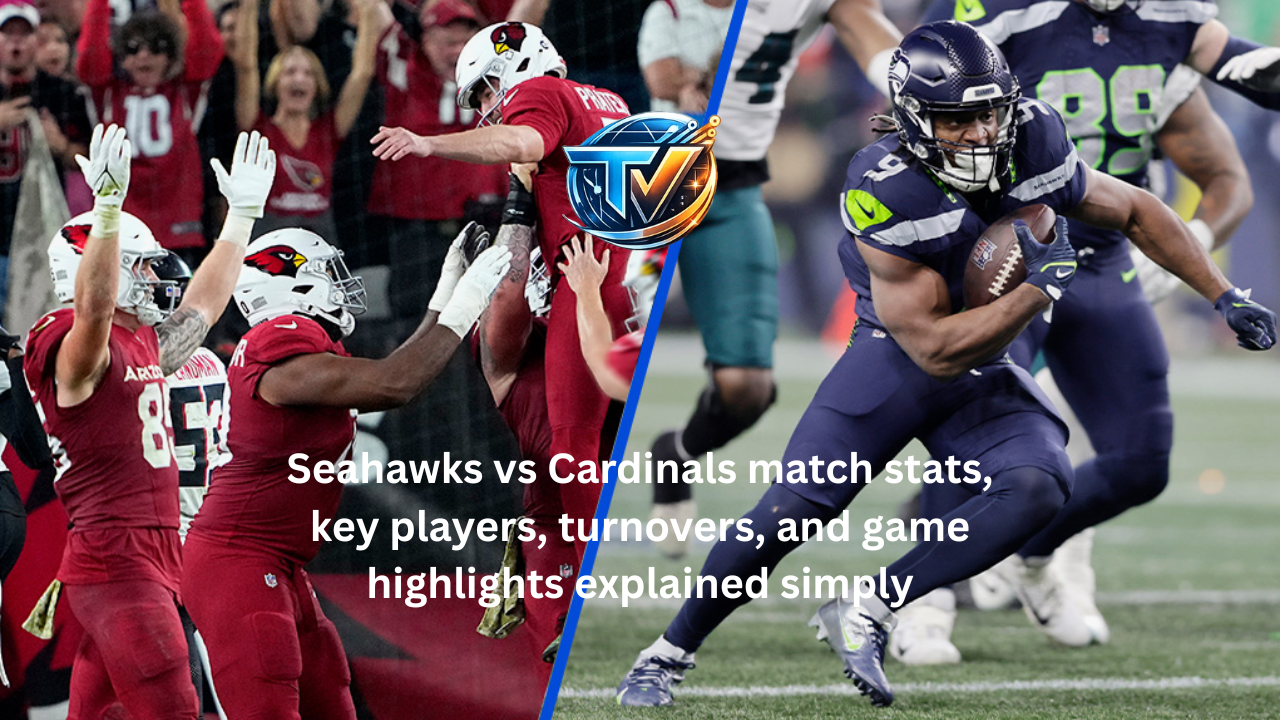
Some NFL matchups just feel a little more personal.
Maybe it’s the division rivalry. Maybe it’s the history of close finishes. Or maybe it’s just the way both teams tend to swing between dominance and collapse in the same game.
That’s exactly the vibe when the Seattle Seahawks face the Arizona Cardinals.
And when you start digging into Seahawks vs Arizona Cardinals match player stats, you quickly realize something: the numbers don’t just tell you who won. They explain how the game actually unfolded.
Let’s break it down properly.
A Rivalry Built on Momentum Swings
If you’ve watched these two teams over the years, you already know the pattern.
One team starts hot. The other answers back. Then the game turns into a series of momentum swings that feel almost scripted.
That’s why player stats matter so much here. They show when control shifted.
Not just final scores. But the story inside the game.
And this matchup usually has a story worth telling.
Quarterback Performance: Where the Game Is Decided
Let’s start with the most obvious influence—quarterbacks.
For Seattle, the spotlight usually falls on their passing game rhythm, especially under pressure. Whether it’s short throws to reset drives or deep shots when defenses creep up, their quarterback play often defines their offensive identity.
On the Arizona side, the quarterback performance tends to be more variable—sometimes explosive, sometimes conservative depending on game flow.
Now here’s the thing.
In games like this, completion percentage alone doesn’t tell you much. You have to look at:
- yards per attempt
- third-down conversions
- red zone decisions
- turnovers
Because one interception at the wrong time can swing everything.
A single forced throw late in the second quarter? That’s often where momentum changes hands.
Running Game Stats: Quiet but Crucial
People often overlook the run game until it disappears.
For the Seattle Seahawks, the ground attack usually plays a stabilizing role. Not always flashy, but important for controlling tempo.
When the run game is working:
- it opens up play-action
- it keeps the defense honest
- it shortens pressure on the quarterback
For the Arizona Cardinals, the rushing stats often reflect situational play-calling. Some drives lean heavily on the run to reset rhythm, especially after stalled possessions.
A small but realistic scenario?
A team faces 3rd-and-2. They run it. Get stuffed. Suddenly, the next drive becomes more pass-heavy. That shift shows up later in the stats—but it starts right there.
That’s how running backs influence games without ever dominating headlines.
Wide Receivers: Big Plays That Change Everything
If there’s one stat category fans always check first, it’s receiving yards.
And for good reason.
This matchup often features receivers who can flip the field in a single play.
For Seattle, explosive downfield threats tend to stretch defenses vertically. One deep catch can turn a quiet drive into a scoring chance instantly.
For Arizona, receivers often thrive on quick separation routes—slants, crossers, and yards after catch.
Here’s the difference:
- Seattle: impact through deep shots
- Arizona: impact through volume and space creation
And when one of those styles gets going early, the defense usually starts adjusting fast.
That’s when stats start stacking up quickly.
Defensive Stats: Pressure, Sacks, and Timing
Now we get to the part of the game that doesn’t always show up on highlight reels—but absolutely changes outcomes.
Defensive pressure.
Sacks, quarterback hits, forced throws.
For the Seattle Seahawks, defensive pressure often comes in waves. A quiet first quarter can suddenly turn into a dominant stretch where the offensive line can’t keep up.
For the Arizona Cardinals, defensive stats often reflect opportunistic moments—key stops, sudden turnovers, or red zone stands.
A realistic example?
Third down. Quarterback drops back. Edge rusher breaks through. Sack.
Drive over.
That one stat line changes field position, momentum, and sometimes the entire tone of the game.
Turnovers: The Hidden Stat That Decides Everything
Let’s be honest.
You can win almost every stat category and still lose the game because of turnovers.
That’s how important they are.
In Seahawks vs Cardinals matchups, turnovers often come at the worst possible time:
- red zone interceptions
- strip sacks
- tipped passes
And the impact is immediate.
A drive that should’ve ended in points suddenly becomes nothing. Or worse, it becomes points for the other team.
That’s a 6 to 14-point swing depending on the situation.
And it doesn’t always feel that dramatic while watching it happen—but it is.
Special Teams: The Forgotten Difference Maker
Most people only notice special teams when something goes wrong.
A missed field goal. A long return. A blocked kick.
But in close games between the Seattle Seahawks and the Arizona Cardinals, special teams quietly shape field position all game long.
Think about this.
A 15-yard difference on average starting field position doesn’t sound huge.
But over multiple drives?
It shortens scoring drives. It changes play-calling decisions.
Small detail. Big impact.
A Real Game Flow Scenario
Let’s put everything together.
First quarter: both teams trade short drives. Defense is sharp. Stats stay balanced.
Second quarter: one quarterback starts hitting deep passes. Receiving yards spike. Suddenly, momentum shifts.
Third quarter: defensive pressure increases. One sack leads to a turnover. That’s where the game tilts.
Fourth quarter: rushing attempts increase as one team tries to control clock. Stats become lopsided in possession but not necessarily scoring.
That’s how these games usually unfold.
Not clean. Not linear. But layered.
Why Stats Don’t Always Tell the Full Story
Here’s the thing.
Box scores are useful, but they’re incomplete.
A quarterback might throw for 280 yards. Sounds solid.
But if 120 of those yards came in “garbage time,” the impact is very different.
Same with rushing yards. Same with receiving totals.
Context matters more than raw numbers.
That’s especially true in divisional games like this one.
What Fans Usually Miss When Reading Stats
Most fans focus on:
- total yards
- touchdowns
- turnovers
But the deeper story is often in:
- third-down efficiency
- red zone conversion rate
- time of possession
- defensive pressure rate
Those are the numbers that explain why the game went the way it did.
Not just what happened.
Final Thoughts
When you look at Seahawks vs Arizona Cardinals match player stats, you’re really looking at a layered story.
The Seattle Seahawks and the Arizona Cardinals don’t just play a straightforward game against each other.
They trade momentum. They react to pressure.
And every stat line—passing yards, rushing attempts, sacks, turnovers—fits into that bigger rhythm.
So the next time you check the numbers after this matchup, don’t just scan the totals.
Look at how they built up.
Because that’s where the real game lives.
