

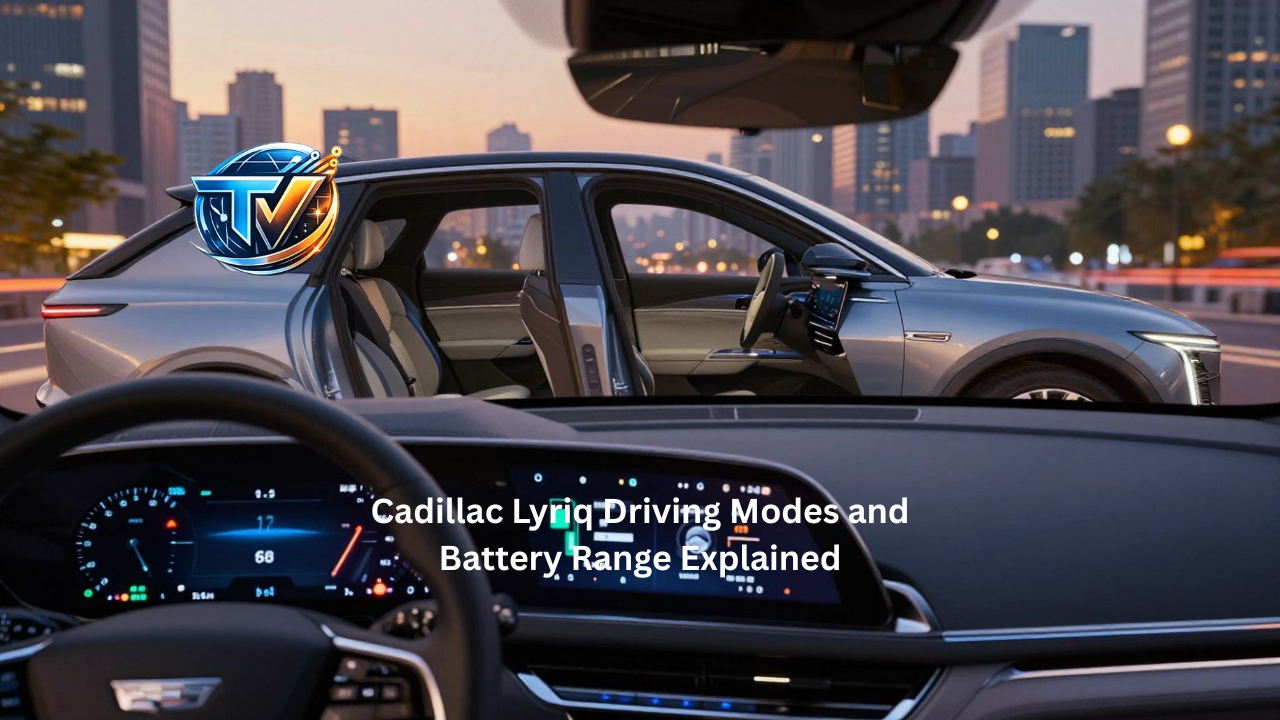
Electric vehicles change the way people think about driving.
Not just charging. Not just acceleration. Even everyday things like driving modes suddenly matter more than they did in gas-powered cars.
That’s exactly why so many owners and potential buyers ask the same question about the Cadillac Lyriq:
Do the driving modes actually change range or battery usage?
Short answer? Yes, they absolutely can.
But maybe not in the dramatic way some people expect.
The interesting part is how those modes affect energy consumption, because it’s less about magic battery settings and more about changing the vehicle’s behavior, throttle response, climate usage, regenerative braking, and overall efficiency habits.
And honestly, once you spend a little time driving an EV, you start noticing the difference pretty quickly.
Why Driving Modes Matter More in EVs
In older gas vehicles, driving modes often felt gimmicky.
Sport mode made the steering heavier.
Eco mode dulled acceleration.
That was usually it.
Electric vehicles are different because power delivery is immediate and software controls almost everything. Small adjustments in how the vehicle responds can noticeably change energy use.
The Cadillac Lyriq relies heavily on software management, which means drive modes influence the entire driving feel.
And yes, that includes efficiency.
The Main Driving Modes in the Cadillac Lyriq
Depending on trim and configuration, the Lyriq includes multiple selectable driving experiences.
These generally include:
Tour
Sport
Snow/Ice
My Mode or customizable settings
Each mode changes how the SUV behaves.
Not dramatically enough to feel like a completely different vehicle, but enough that you notice it during regular driving.
Especially over longer distances.
Tour Mode Is Usually the Efficiency Sweet Spot
For most drivers, Tour mode becomes the default quickly.
It balances comfort, smooth acceleration, steering feel, and energy usage without feeling restrictive.
Here’s the thing.
Efficient EV driving doesn’t mean driving slowly all the time. It means avoiding unnecessary energy spikes.
Tour mode helps with that naturally.
Throttle response feels smoother and less aggressive, which reduces sudden battery drain during acceleration.
Think of it this way.
If Sport mode feels like a sprinter exploding off the line, Tour mode feels like someone pacing themselves intelligently through the whole day.
Sport Mode Can Reduce Range
Now let’s be honest.
Sport mode is fun.
The instant torque in an EV already feels quick, but Sport mode sharpens everything further. The accelerator becomes more sensitive, power delivery feels more aggressive, and the vehicle responds faster to driver input.
That extra responsiveness usually increases battery usage.
Not because the battery itself changes, but because the vehicle encourages more aggressive driving behavior.
And aggressive acceleration burns energy quickly in EVs.
Very quickly.
A Real-Life Example Makes It Clear
Imagine two people driving the exact same Lyriq to work.
One uses Tour mode, accelerates smoothly, and coasts naturally into traffic lights.
The other drives in Sport mode, launches hard from every stoplight, and constantly pushes quick bursts of speed.
Same battery.
Different energy outcome.
By the end of the week, the second driver will almost certainly see lower efficiency numbers.
Regenerative Braking Plays a Big Role
One of the biggest range-related factors in EVs isn’t acceleration.
It’s regenerative braking.
The Cadillac Lyriq uses regen braking to recover energy when slowing down. Some modes and settings affect how aggressively this works.
Drivers who learn to maximize regen often squeeze noticeably better range from the same battery pack.
That surprises many first-time EV owners.
You’re not just driving differently. You’re learning a different rhythm entirely.
One-Pedal Driving Changes Everything
Cadillac’s one-pedal driving setup can improve efficiency for many drivers because it increases regenerative energy recovery.
Once you get used to it, it becomes strangely addictive.
You lift your foot slightly and the vehicle begins slowing while feeding energy back into the battery.
In stop-and-go traffic especially, this can help range noticeably.
Now, it won’t suddenly add 100 miles of extra driving.
But small gains add up over time.
Weather Impacts Battery Usage More Than Modes
Here’s something many people overlook.
Outside temperature often affects EV range more than drive mode selection.
Cold weather reduces battery efficiency.
Air conditioning and heating consume energy.
Wind resistance at highway speeds drains range faster than city driving.
So while Sport mode absolutely uses more power overall, winter weather can have an even larger impact on daily range numbers.
Snow/Ice Mode Prioritizes Control
Snow/Ice mode changes traction behavior rather than chasing efficiency.
Power delivery becomes softer and smoother to reduce wheel slip.
That controlled response can indirectly help efficiency because aggressive wheelspin wastes energy, but the primary goal is stability and safety.
And honestly, that matters more during bad weather.
Nobody cares about saving a tiny amount of battery if the vehicle feels unstable on icy roads.
Highway Driving Reveals the Biggest Differences
The biggest efficiency swings usually happen on highways.
At higher speeds, aerodynamic drag becomes a major factor. Add aggressive acceleration or repeated speed changes, and battery consumption rises quickly.
Sport mode tends to encourage exactly that kind of driving.
Meanwhile, Tour mode promotes smoother cruising behavior.
That’s why long-distance drivers often stick with calmer settings.
Why EV Drivers Become Efficiency Nerds
Something funny happens after people buy an EV.
They start watching energy numbers constantly.
You’ll see owners discussing miles-per-kWh the way fitness people talk about calorie tracking.
And honestly? It becomes a game.
People experiment with driving styles, climate settings, regen habits, and modes just to see what changes efficiency.
The Lyriq is no exception.
Does My Mode Affect Battery Usage?
Customizable modes can influence efficiency depending on the settings selected.
For example:
Sharper throttle response usually increases consumption.
Smoother acceleration settings often improve efficiency.
Steering adjustments themselves have less impact.
The battery doesn’t magically become larger or smaller. The software simply changes how aggressively the vehicle behaves.
That distinction matters.
Luxury and Efficiency Don’t Always Match Perfectly
That means comfort features matter.
Big screens.
Climate control.
Quiet cabin insulation.
Premium audio.
All of those systems use energy too.
So maximizing range sometimes means balancing comfort choices with efficiency habits.
Most owners settle somewhere in the middle.
What Actually Makes the Biggest Difference
Smooth acceleration
Consistent speeds
Smart climate use
Effective regen braking
Moderate highway speeds
Those factors usually matter more than simply pressing the Sport or Tour button.
My Honest Take After Watching EV Trends
A lot of drivers overestimate how much driving modes alone change range.
They matter, yes.
But driver behavior matters more.
A calm driver in Sport mode may still outperform an aggressive driver in Tour mode when it comes to efficiency.
The software influences habits, but your right foot still controls most of the outcome.
Why Cadillac Handles This Well
Cadillac did a smart job balancing performance and comfort in the Lyriq.
Some EVs push efficiency so hard they feel dull.
Others chase speed constantly and sacrifice practicality.
The Lyriq lands in a more relaxed middle ground.
Even in Sport mode, it still feels refined rather than chaotic.
That balance suits the luxury SUV audience well.
The Psychological Side of Driving Modes
This part gets overlooked.
Driving modes change mindset too.
Sport mode subtly encourages excitement.
Tour mode encourages calm cruising.
That psychological effect changes battery usage almost as much as the software changes themselves.
Humans adapt to the environment they’re given.
Cars are no different.
Final Thoughts
So, do the driving modes in the Cadillac Lyriq offer different ranges or battery usage?
Yes, they do.
But the effect comes mainly from how the modes shape driving behavior, power delivery, regenerative braking, and responsiveness rather than changing the battery itself.
Tour mode generally delivers the best balance for efficiency and comfort.
Sport mode sacrifices some range for sharper performance.
And real-world results depend heavily on the person behind the wheel.
That’s the interesting thing about EVs.
Two people can drive the same vehicle, on the same road, with the same battery, and still end up with completely different range numbers by the end of the day.
